The ideal professional dancers look uncomplicated. They float with space and then land with precision, resolute. That convenience is not magic. It is the item of two high qualities learnt tandem: toughness and versatility. When those 2 get out of equilibrium, the body lets you recognize. Hamstrings yank. Knees grumble. Jumps plateau. But when power and pliability comply, method sharpens, creativity broadens, and the body stands up to difficult timetables and heavier choreography.
I learned this the candid way my 2nd year dance 8 shows a week. My arabesque might scuff 90 levels and my calf bones were solid enough to bring me with grand allegro, however deep pliés began to pinch and turns really felt inconsistent. A physiotherapist examined my hip rotation, after that had me attempt a single-leg squat. My knee wandered inward like a compass needle pulled by magnetism. The decision: sufficient versatility to cheat a line, not nearly enough strength to sustain it. We retrained. 6 weeks later, the pains discolored and the turns cleaned up. The modification had less to do with stretching an increasing number of to do with matching the flexibility I had with the stamina to have it.
What versatility actually does for a dancer
Flexibility is not just the ability to touch your toes. It has to do with practical array, functional at rate, under load, and without pain. In dance training, flexibility allows you develop lines, dissipate impact forces, and access yield without turning the knees or feet. It allows a lengthy backbend that still has breath in it, and hips that can move in three aircrafts without recruiting the reduced back as a shortcut.
There are two containers right here. Passive adaptability is just how far a joint can be relocated by an outside force, like a partner helping a stretch. Energetic versatility is how far you can relocate on your own and hold that end variety with control. Ballet asks for big easy ranges, yet modern-day choreography increasingly demands huge energetic varieties. Consider a développé à la seconde: you can be drawn higher, yet the cam and the audience only see what you can lift and sustain. If your energetic flexibility hangs back passive by greater than around 15 to 20 percent, you are renting out variety you can not pay for. That space regularly shows up in common overuse problems, from hip pinching in retiré to ankle joint instability on landings.
Flexibility is likewise particular to cells and instructions. Hip outside rotation can hide tightness in hip expansion; a supple backbend can mask rigid thoracic rotation; great hamstring size might exist side-by-side with limited calves. Professional dancers tend to stretch what they understand and what feels rewarding. Hamstrings get attention. Hip flexors endure unclear swan stretches. At the same time, adductors and deep rotators silently become Additional info the restricting factor. The body does not bargain. It takes the course of the very least resistance, even when that course drifts into compensation.
What stamina really contributes
When you practice toughness for dance, you're not attempting to end up being a powerlifter in slippers. You're developing the ability to create force, soak up pressure, and repeat that cycle without shedding kind. Stamina sustains turnout by maintaining the pelvis, it steadies the knee when a landing isn't best, it keeps the upper body high via a slow-moving promenade. It makes transforms constant by offering you a reputable axis.
Two types of strength issue most for dancers. The initial is topmost stamina relative to bodyweight. How heavy is a deep squat, a single-leg calf bone raising, or an isometric relevé hold compared to what your body considers? The 2nd is rate of force development, in some cases called power. That's what you need to leave the flooring quickly, snap a shape on the beat, or recoup a balance. Several dancers have great endurance, after that hit ceilings in power and optimum stamina. If your saut de chats really feel floaty yet low, it might not be cardio holding you back. It might be that your cells haven't learned to generate even more pressure, faster.
There's a quieter kind of toughness also: isometrics. Holding power within a joint angle is vital for equilibriums and sluggish adagio. Include eccentric toughness, the capability to regulate motion as muscular tissues lengthen, and you've obtained the slowdown piece of landings and regulated descents from relevé. These top qualities respond magnificently to targeted training. They do disappoint up automatically from course alone.
The collaboration: tension and slack
A dancer's body is a system of pulleys. Muscular tissues develop tension, connective cells stores and launches elastic power, and the nerves works with timing. Way too much slack, and the system sheds snap. Too much constant stress, and it loses range. The pleasant area is tissue that can lengthen when asked and recoil when needed, muscles that can ramp up swiftly and afterwards unwind fully, and a nerves that really feels risk-free in end ranges.
This is why static stretching right before ultimate dives seldom assists and sometimes injures performance. The neuromuscular system detects slack and reduces recruitment. Dynamic wheelchair warmups, on the various other hand, rehearse varieties with light tons and rate. They tell the body, we will move like this, prepare yourself. Conserve your much deeper static help after course or later in the day, when your cells are cozy and your nerves has a factor to allow go.
Assess initially, then train
A good dance training strategy starts with a sober consider what you can do now. Not a thousand-screen lab analysis, just a handful of dry runs that notify your following month.
Here's an approach I make use of with pre-professionals and working pros. Maintain notes. Re-test every 4 to 6 weeks.
- Five fast checks for balance and capability: 1) Single-leg calf increases to failure, both legs, sluggish pace. Target variety 20 to 30 high quality reps. 2) A 30-second single-leg equilibrium with eyes directly ahead. Add head transforms if simple. 3) Deep bodyweight squat with heels down. Movie from the side and front. Try to find spinal column nonpartisanship and knee monitoring. 4) Active straight leg raising resting. Can you reach 70 to 90 levels without getting behind the thigh? 5) Side-lying hip abduction activity. Can you raise the leading leg to hip height without rolling in reverse, 15 to 20 regulated reps? Two array comparisons: 1) Standing développé front and side, active elevation versus aided height. Keep in mind gaps. 2) Seated straddle ahead fold. Step chest-to-floor distance and compare to exactly how open your adductors really feel in a vast 2nd setting plié.
If these reveal huge crookedness or pain, loophole in a medical professional that understands dance. If they show clear voids, program to shut them. You will likely locate that the weakest links live around the hips and feet.
Strength sessions that appreciate the art form
I listen to two anxieties from professional dancers regarding stamina job. The very first: lifting will make me bulky. The second: it will certainly mess up my lines. Both problems normally fade after a month of thoughtful programs. Smart toughness training for dancers opportunities range, tempo control, and relative toughness. It makes use of complete ROM, pace adjustment, and unilateral job to shield lines and enhance control.
A basic framework that works well alongside heavy rehearsal blocks:
- Two toughness sessions per week on non-consecutive days, 35 to 55 mins each. Choose 3 to 4 primary movements that enhance your existing repertoire demands. Keep overall tough collections per muscle mass team in the 6 to 10 array each week if you're doing full-out wedding rehearsals, 10 to 14 if you remain in a lighter period. Favor single-leg and single-arm job to keep proportion and pelvic control.
Example pairing for a professional dancer concentrated on elevation, transforms, and landings:
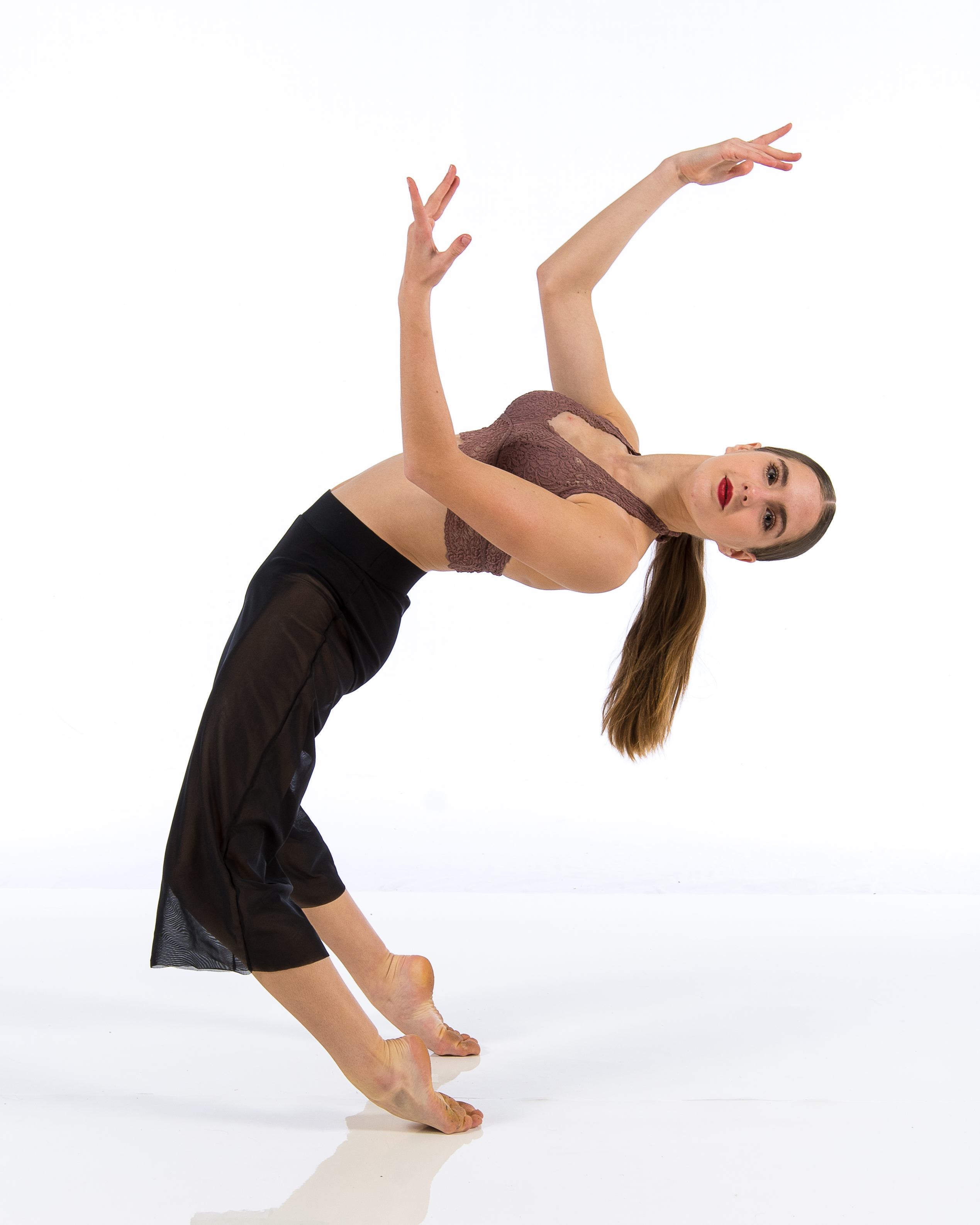
- Split crouches or rear-foot elevated split crouches, 3 to 4 collections of 6 to 8 per side, complete length, decrease, crisp up. Romanian deadlifts with a kettlebell or light bar, 3 sets of 6 to 8, concentrating on hamstring tension and neutral spine. Standing calf bone elevates on a step, 3 sets of 10 to 12, 2-second time out on top and near the bottom, then one extended isometric hold to exhaustion in relevé. Pallof press or half-kneeling cord press, 3 collections of 8 to 10 per side, to train anti-rotation and rib control. Optional: reduced box leaps or pogo hops, 3 collections of 6 to 8, just if you can land quietly and stiff with the foot-ankle-spring.
That last note issues. If you can not land tiny jumps silently, include even more eccentric calf and quad job and delay the plyos. Power layered on top of instability is the fastest method to irritate tendons.
Flexibility that sticks
Chasing brand-new array is easy. Keeping it is the trick. Long-term flexibility comes when you match variety work with strength at the side. Think about each stretch as a discussion with the nerve system. It will certainly give you extra activity if it trust funds you can handle it. The quickest means to earn that depend on is to pack the new angle, even gently, right after you open it.
In technique, that resembles a two-part pairing. First, a wheelchair drill that targets the minimal tissue. Second, a toughness drill that uses that range actively.
For instance, if hip flexors limit your backbends and arabesques, try a lengthy lunge stretch with posterior pelvic tilt for 60 to 90 secs per side, after that go straight right into a susceptible hip extension lift with the abdominals gently braced, 8 to 12 controlled reps. If your adductors restrict your 2nd, do a Cossack squat to open, after that a side-lying adduction lift to have it. If your calves hold back your pliés, hang out in a deep dorsiflexion stretch on a wedge or angle board, after that do slow-moving tibialis raises or controlled calf raises through the brand-new angle.
Breath is your ally here. Sluggish nasal breathings with longer, relaxed exhalations relax the nerve system and commonly provide you an additional few levels without more pressure. Discomfort is not your guide. Light strength that alleviates within a couple of breaths is enough.
The foot and ankle: your first return on investment
The most disregarded strength-flexibility pairing in dance training lives listed below the knee. Strong feet and calf bones permit much deeper pliés without heel lift, quieter landings, and steady turns. Flexible ankles permit that much deeper range, yet without calf bone strength, you will not control it.
Two components pay back swiftly: calf-soleus ability and large toe extension. Aim for 20 to 30 single-leg calf raises with clean type, then build soleus toughness with bent-knee calf bone raises. For the large toe, delicately mobilize expansion, then pack it with doming drills and heel raises that focus on pressing via the first metatarsal. Dancers with unpleasant Achilles rigidity typically discover relief within three weeks by including sluggish eccentric calf reduces and foot intrinsic work 3 times a week.
I dealt with a contemporary dancer that could float a dual excursion however dreadful long rehearsal days on Marley since the tendons discharged back by the second run. His reassessment showed only 12 quality single-leg calf bone raises and a barely 25-degree large toe expansion on the right. We focused on calf bone endurance and huge toe movement, then incorporated pogo hops later on. The dual tour obtained easier, but extra significantly, he could end up a six-hour rehearsal without that tendon bark.
Turnout: where strength keeps you honest
Turnout fuels most timeless vocabulary, yet the strategy for training it changes the outcome. Forcing yield from the feet and knees wins a temporary angle and a long-lasting injury. Educating outside potter's wheels, glute medius, and deep abdominals develops turnout you can utilize in motion.
A functional technique integrates 3 items. First, instruct your hips to stay level with adductor and glute co-contractions. Side-lying clamshells are excessive used and undercoached; instead, attempt a grouped avoid with a neutral pelvis and a slight bend in the hips, or a standing turnout isometric, heels together, balls of the feet pressing the floor apart, 20 to 30 seconds. Second, load the pattern with split squats carried out in small yield, knees tracking over 2nd toe, really feeling the hip rotators working eccentrically as you lower. Third, examination the transfer in course by seeing if you can suffer turnout via transitions, not just picture-perfect forms. The objective is rotation that endures a weight shift and a direction adjustment, not turnover that only exists at the barre.
Core without the problem obsession
You can plank for 3 minutes and still collapse in an arabesque balance if you do not train the core in dance-relevant means. What professional dancers need most is control of the ribcage over the hips in 3 measurements. That resembles anti-extension when raising the leg backward, anti-rotation in turns and boardwalks, and segmental movement through the spine for port de bras.
Three approaches go much. Isometrics that withstand activity, such as dead insect variants and side slabs with reach, teach you to hold. Slow rotational patterns with cables or bands teach you to relocate the ribs independently of the hips. Ultimately, breathing drills that broaden the back and sides of the ribcage instruct you to maintain length without flaring the ribs. If your backbends seem like a joint in the lumbar back, you likely need more thoracic movement and more abdominal control, not even more stretch right into the exact same hinge.
Periodization that fits wedding rehearsal life
Dancers hardly ever obtain tidy off-seasons, however you can still cycle emphasis. A straightforward tempo over eight to twelve weeks can transform exactly how your body really feels in class.
- Foundation stage, 3 to 4 weeks: concentrate on eccentric toughness and array. Slower tempos, longer ranges, isometrics at end range. Objective: construct control and address asymmetries. Power stage, 3 to 4 weeks: keep one to two stamina movements heavy relative to your capacity, and include little dosages of explosive work. Reduce complete volume a little to respect exhaustion. Goal: elevate your ceiling for jumps and fast accents. Maintenance stage, continuous throughout program runs: maintain 2 toughness movements and one mobility-strength pairing, 25 to 40 mins, two times weekly. Objective: hold what you built with marginal soreness.
Match tons to your wedding rehearsal day. If the timetable includes heavy leaping, press your reduced body strength session 24 to 2 days away, and concentrate on upper body and core that day. If you're in a partnering-heavy block, train hold and top back a lot more, legs somewhat less. Autoregulation matters. If sleep is short and discomfort high, reduce sets, not regularity. Uniformity surpasses heroic solitary sessions.
The concealed variable: healing that allows adaptation
Training is a stimulation. The adjustment takes place between sessions. Professional dancers usually underfuel and then wonder why the body feels brittle. Healthy protein sustains cells fixing. A practical array is 1.6 to 2.2 grams per kg of bodyweight each day, spread out across meals. Carbs are not an indulgence. They are the fuel for class, wedding rehearsal, and lifts. If your legs feel like sandbags by the 3rd hour, you possibly require a lot more carbohydrates than you believe and extra electrolytes than simple water offers.
Sleep still wins. 7 to nine hours seems glamorous in show weeks, but also a reputable 6.5 with a 20-minute nap aids. Maintain snoozes previously in the day and dim your area in the evening. Little changes build up. Changing the last 15 mins of night scrolling with legs-up-the-wall and breath work does a lot more for your tissues than one more fixed hamstring stretch.
Mistakes I still see, and what to do instead
- Stretching right into discomfort and calling it progress. A bite that reduces within a couple of breaths is great. Sharp or nervy sensations are a caution. Back off and alter angle or support. Treating cross-training like a punishment block of common gym job. Accuracy issues. Select exercises that match your spaces, and ditch ones that do not pay back the time. Ignoring feet and adductors. Many dancers spend more time on hamstrings than on inner thighs and feet. Turn that emphasis for a month and view how your method cleans. Overdoing plyometrics with tired cells. If you can't land quietly from a 12-inch decline, you're not ready for greater volume or harder variations. Training only what shows on stage. The muscle mass you don't see in photos are usually the ones maintaining you healthy.
A sample week that respects reality
No week is perfect. Theater runs, instructing timetables, and injuries all shuffle top priorities. Here's a sensible skeleton that has actually helped numerous professional dancers I instructor. Tweak timing around your heaviest days.
- Monday: Class and rehearsal. After, 25 minutes of mobility-strength pairings: hip flexor openers right into energetic hip extension, adductor openers right into Copenhagen side slabs, ankle joint dorsiflexion right into tibialis raises. Finish with a 2-minute per side calf isometric in mid-range relevé. Tuesday: Toughness session A, 45 mins. Split squats, Romanian deadlifts, standing calf bone increases with paces, Pallof press. Five mins of breath-led thoracic mobility. Wednesday: Lighter class emphasis, facility just. Strategy hints on turnout with transitions. Ten minutes of foot intrinsic drills and balance. Thursday: Toughness session B, 35 to 40 mins. Single-leg squat to box, side-lying hip kidnapping with slow-moving eccentrics, bent-knee calf elevates, cord chops. Optional low-impact pogo jumps if landings are quiet and you really feel fresh. Friday: Rehearsal-heavy. Maintain cross-training to 15 mins of recovery: foam rolling, simple mobility, breathwork. Saturday: Show or run-through. Heat up with dynamic mobility instead of fixed extending. After, 5 mins of long exhale breathing to move states. Sunday: Off or energetic recuperation. Walk, gentle swimming pool session, or a 30-minute mobility circulation with no forcing.
This doesn't look flashy. The gains come from repeatability. If you can strike 2 stamina sessions and two mobility-strength pairings most weeks, your body will certainly change in ways you feel in class.
Injury patterns that point to imbalances
Patellofemoral discomfort usually turns up when the quad controls and the hips delay. Strengthen glute medius and rotators, activate ankle joints to allow much deeper knee traveling without heel lift, and watch signs and symptoms cool down. Achilles and posterior tibial ligament concerns frequently reflect a mismatch in between calf strength and wedding rehearsal dive matters, plus stiff ankle joints and undertrained foot intrinsics. Low back pain in arabesques frequently traces to tight hip flexors, weak glute max in end range, and a rib flare practice. Hamstring muscle stress tend to attack when dancers drive expansions from the reduced back and hamstring as opposed to sharing the tons with glutes, deep abdominals, and adductors.
None of these are ethical failings. They are training signals. Resolve the underlying stamina and adaptability patterns and the signs commonly follow.
The virtuosity dividend
When strength and versatility regard each other, artistry gets easier. You stop bargaining with your body for every single form. Phrases end up being flexible. A sluggish développé comes to be an option, not a fight. Dive landings come to be punctuation, not question marks. Allies depend on your facility. You can take dangers due to the fact that you can take in the consequences.
One of my preferred moments mentoring a cast came during a two-week residency that closed with a difficult section of repetitive sautés. Professional dancers started to chip at Dance training touchdowns by day three. We took 10 minutes at workout for calf-soleus work and 5 minutes after for isometric holds at mid-range. By the 2nd weekend, jumps still looked vibrant. No person included elevation, however nobody lost tranquility or timing. The audience wouldn't recognize why, yet the cast felt it. This is the sort of low-glamour investment that divides making it through a run from savoring it.
How to know you remain in balance
You can not manage what you do not measure. Keep easy, duplicating metrics. Are your active and easy ranges merging? Can you hold a single-leg relevé for 45 to 60 seconds with a steady ankle joint, then duplicate it after class without constraining? Are you striking 20 to 30 single-leg calf raises with real variety and control? Do your hips feel the work in yield instead of your knees? Are landings silent at the end of practice session, not simply the start?
These checkpoints take five mins, and they tell you if the program sustains the work you respect. If something stalls, readjust one variable each time. Include a set. Remove a plyo block. Swap a go for a packed wheelchair drill. After two weeks, recheck. Little course adjustments beat program overhauls.
Edge instances and trade-offs
Hypermobile professional dancers require even more toughness and less hostile stretching than they believe. The nervous system already allows array; the goal is control and joint stability. Ehlers-Danlos and comparable connective cells accounts are entitled to clinician input and a predisposition toward isometrics and sluggish eccentrics.
Older professional dancers and teachers may require longer warmups and more healing, however react perfectly to consistent strength work. Bone thickness gets a peaceful enact this conversation. Filled squats, joints, and impact in determined doses shield long-lasting health.
During hefty imaginative periods when choreography adjustments daily, prioritize cells resistance and isometrics. When choreography locks, press stamina a bit much more. Exploring demands tricky uniformity: hotel-room isometrics, grouped hip job, and calf bone increases on a stair are enough to hold the line in between venues.
A closing note from the studio floor
The finest training is the one you can maintain through the turmoil of genuine dance life. It appreciates the art and the calendar. It makes a body that feels like a collaborator rather than a constraint. Toughness and flexibility are not opposites. They are dance partners that find out each various other's timing and build depend on gradually. Some weeks one leads, some weeks the various other. Over months, the duet matures.
If your body presently really feels stuck, pick one gap to close. Enhance at your end array. Offer your calf bones the focus you normally provide your hamstrings. Profession 5 mins of pre-class static going for vibrant wheelchair and see how your legs leave the floor. Maintain notes. Re-test. The payoff reveals not just in greater legs or larger dives, but in how you own the room between them.
Dance training can feel like chasing a relocating target. Equilibrium power and pliability, and the target steadies. The work gets cleaner. The art beams brighter.
Business Name: Doty Performance Website: https://www.dotyperformance.com/ Phone: +1 (503) 822-5276 Address: 20345 SW Pacific Hwy #306, Sherwood, OR 97140, United States About Doty Performance: Doty Performance is a dance studio in Sherwood, Oregon that offers a variety of dance programs for all ages and levels of dancers. We have classes for Ballet, Tap, Jazz, and Hip-Hop. So if you are looking for a dance studio near me that welcomes all skill levels, ages, and genders, look no further than Doty Performance dance studio.